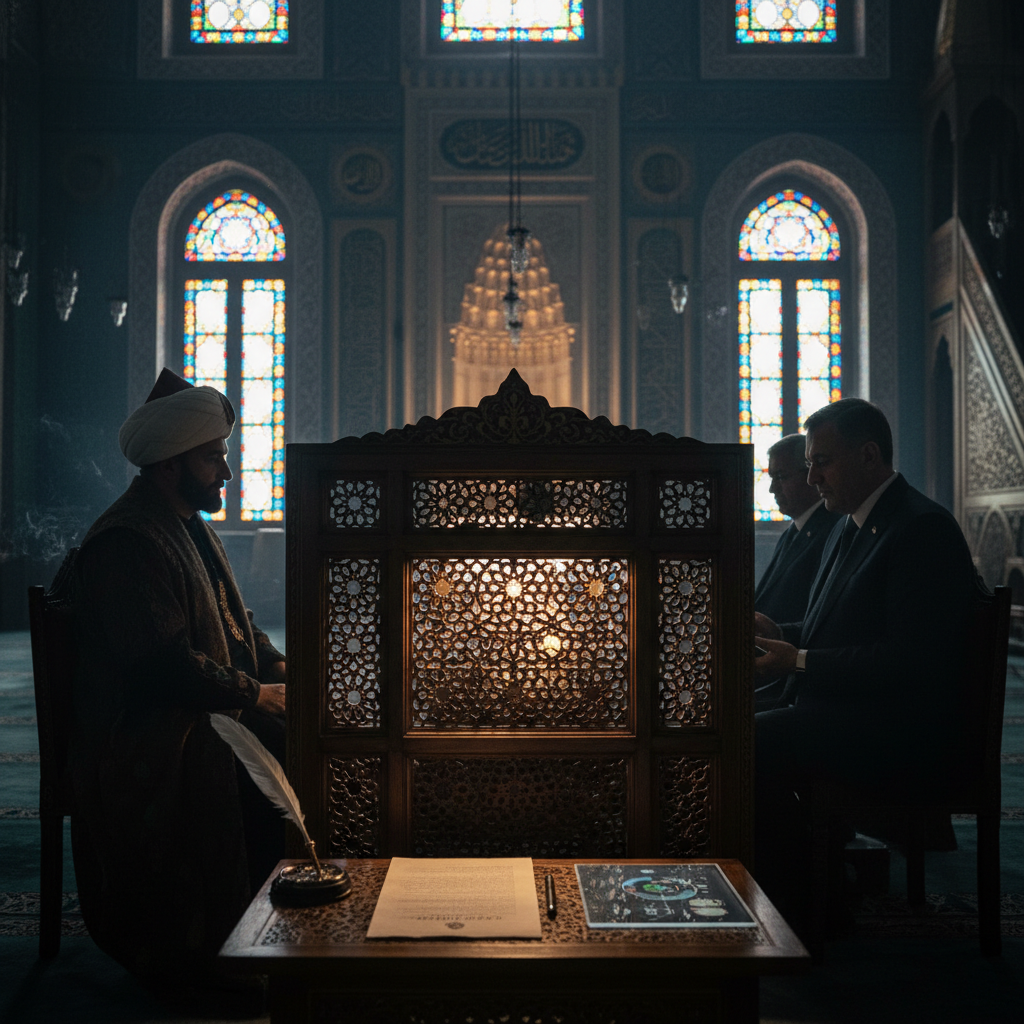
Behind-the-Scenes Diplomacy of Eyüp Sultan Mosque: Political Negotiations and Strategic Decisions from Sultan Mehmed the Conqueror to 2026
Eyüp Sultan Mosque, a powerful symbol of Istanbul's conquest, has consistently served as a vital hub for political discussions and strategic decision-making. From Sultan Mehmed the Conqueror's reign to the present day in 2026, this iconic landmark has witnessed countless diplomatic exchanges and shaped critical historical outcomes, extending its influence far beyond its religious function.
Eyüp Sultan Mosque and Politics: Political Discussions and Strategic Decisions from Fatih Sultan Mehmet to 2026
Eyüp Sultan Mosque, one of the enduring symbols following the conquest of Istanbul, has for centuries been not only a revered place of worship but also a pivotal center where significant political discussions and strategic decisions were forged. This article delves into the intricate relationship between Eyüp Sultan Mosque and Politics, exploring its historical significance and ongoing influence. Especially spanning from the era of Fatih Sultan Mehmet to the present day, Eyüp Sultan Mosque politics has carved out a unique and influential niche on the broader historical and political stage. Even as we arrive in 2026, this profound historical structure retains its undeniable significance, carrying echoes of the past and illuminating potential pathways for the future.
Eyüp Sultan Mosque's Historic Role in the Political Arena
Eyüp Sultan Mosque was meticulously constructed immediately after the conquest of Istanbul and, from that foundational day forth, quickly ascended to become a spiritual and political nucleus of the burgeoning Ottoman Empire. The mosque was far more than merely a location where religious rituals were performed; it served as a vital meeting point for state rulers and decision-makers. For instance, critical political rituals such as the deeply symbolic sword girding ceremonies were solemnly performed within its hallowed grounds, highlighting the deep connection between Eyüp Sultan Mosque and Politics.
Fatih Sultan Mehmet and Political Consultations
Fatih Sultan Mehmet placed immense importance on the construction of Eyüp Sultan Mosque right after the conquest of Istanbul. According to historical accounts and legends, Fatih wisely ordered the discovery of Eyüp Sultan's tomb and the subsequent construction of an elaborate complex over it, a strategic move to solidify the spiritual legitimacy and power of his new capital. During this vital period, the mosque rapidly evolved into a primary venue where important state matters were debated, new ambitious conquest plans were meticulously formulated, and crucial political consultations were regularly held. Fatih's frequent personal visits here further amplified the mosque's already significant political importance. In the nascent years of Ottoman rule after 1453, the mosque was prominently considered one of the foremost sources of legitimacy for the newly established imperial order, showcasing the early ties between Eyüp Sultan Mosque and Politics.
Sword Girding Ceremonies and State Administration
The deeply ingrained practice of Ottoman sultans visiting the venerated tomb of Eyüp Sultan and performing elaborate sword girding ceremonies there upon their ascension to the throne vividly demonstrates the mosque's central and indispensable place within the rich tapestry of state tradition. These ceremonies were not simply religious rituals; they were profoundly significant state ceremonies where the sultan's political power and religious legitimacy were publicly and powerfully proclaimed to the populace. This enduring tradition continued to exist as a vital spiritual reference point even into the Republican era, further cementing the historical role of Eyüp Sultan Mosque and Politics.
Eyüp Sultan Mosque and Political Interactions from the Ottomans to the Present Day
Across various epochs of the Ottoman Empire, Eyüp Sultan Mosque politics consistently displayed a structure deeply intertwined with the broader political landscape. Even during the transformative Tanzimat and Constitutional eras, the mosque and its immediate surroundings remained a vibrant environment where the public's political pulse was keenly observed and where diverse ideas were openly discussed. Notably, conversations held after the weekly Friday prayers often evolved into informal platforms where the public voiced their political demands and concerns, illustrating the ongoing connection between Eyüp Sultan Mosque and Politics.
Its Role in the National Struggle Period
During the arduous National Struggle period, Eyüp Sultan Mosque also played an unequivocally important role as a powerful spiritual center of resistance. In occupied Istanbul, the stirring sermons delivered and fervent prayers offered at the mosque were instrumental in sustaining public morale and helped significantly to maintain the indomitable spirit of resistance against foreign occupation. On several occasions, sermons containing strong political stances against the occupying forces were courageously given, galvanizing the community and showcasing the mosque's critical role in Eyüp Sultan Mosque and Politics during a tumultuous time.
Eyüp Sultan's Symbolic Value in the Republican Period
Although the direct political role of Eyüp Sultan Mosque appeared to diminish with the foundational separation of religious and state affairs in the Republican period, its profound symbolic value has consistently been preserved and cherished. Particularly during election periods, the act of politicians visiting the mosque has often been strategically utilized as a means to garner support from the grassroots and to send powerful messages affirming national and spiritual values. The mosque has steadily continued to be an important identifier of national and religious identity, demonstrating the evolving nature of Eyüp Sultan Mosque and Politics.
Eyüp Sultan Mosque Politics and Societal Perceptions in 2026
Today, as of 2026, the intricate relationship between Eyüp Sultan Mosque politics predominantly unfolds on a symbolic and cultural plane. However, it steadfastly remains an important point of visitation for state officials and politicians alike. With the pervasive use of social media and advanced modern communication tools, every visit to the mosque, significant messages conveyed from within its walls, and captivating photos captured reach vast and diverse audiences globally, reinforcing the contemporary relevance of Eyüp Sultan Mosque and Politics.
Politicians' Visits and Messages
It has become a well-established tradition for politicians to visit Eyüp Sultan Mosque and engage directly with the public there during every major holiday, significant religious day, or important national event. These visits are not solely for the purpose of worship; they also frequently offer politicians a valuable opportunity to reinforce their connections with the populace and to convey specific political messages. Such visits continue to hold considerable importance in 2026, demonstrating an ongoing blend of tradition and public engagement in the context of Eyüp Sultan Mosque and Politics.
Media, Public Opinion, and the Perception of Eyüp Sultan
The media plays an undeniably crucial role in effectively reflecting the dynamic relationship between Eyüp Sultan Mosque politics to the broader public. News reports, planned visits, or special events related to the mosque typically receive extensive coverage across various platforms. This consistent attention underscores that the mosque, transcending its function as merely a place of worship, possesses the substantial power to influence and shape the social and political agenda. Especially in recent years, notable restoration works and cultural activities carried out have further reinforced this public perception and appreciation of Eyüp Sultan Mosque and Politics.
The Future Political and Cultural Impact of Eyüp Sultan Mosque
The future political and cultural impact of Eyüp Sultan Mosque will undoubtedly continue to draw its strength and resonance from its deep historical roots and rich heritage. In an increasingly interconnected and modernized world, as the importance attributed to spiritual values expands, the symbolic meaning of the mosque will be further amplified and reinforced. The mosque occupies an indispensable place in the collective memory not only of Istanbul but indeed of all Türkiye, serving as a beacon of cultural identity and historical continuity, and its role in Eyüp Sultan Mosque and Politics will continue to evolve.
Spiritual Leadership and Societal Guidance
In the complex relationship of Eyüp Sultan Mosque politics, spiritual leadership, while not a direct political actor in the governmental sense, has been considerably effective in guiding society's moral and ethical compass. The profound spiritual voice emanating from this sacred place has consistently helped society to coalesce around deeply held values and principles. It is widely predicted that this vital role will continue to be significant in the future, maintaining the mosque's influence on societal guidance.
Representation of Eyüp Sultan in the International Arena
Eyüp Sultan Mosque also plays an important role in promoting Türkiye on the international stage. Visits to Eyüp Sultan by foreign statesmen and other distinguished figures during their diplomatic or cultural trips to Istanbul serve to showcase Türkiye's rich and multifaceted cultural and spiritual wealth. This indicates that the mosque is indirectly utilized as a powerful means of representation within the intricate web of international political relations as well. In 2026, many foreign delegations visiting Istanbul consciously make an effort to experience this deeply historical and culturally significant site, highlighting the global reach of Eyüp Sultan Mosque and Politics.
Conclusion: Eyüp Sultan Mosque and the Continuous Political Context
In summary, Eyüp Sultan Mosque and Politics has consistently held an indispensable and prominent place on the political stage for many centuries. From the momentous entry of Fatih Sultan Mehmet into the city, through the establishment and eventual decline of the Ottoman Empire, the pivotal National Struggle, right up to contemporary Türkiye in 2026, the mosque has persisted as both a tangible physical space and a powerful, enduring symbol. To learn more about Turkey's relationship with Islam today, see Carnegie Endowment for International Peace.
- Throughout its storied history, the mosque has served as a foundational ground where important state decisions were often deliberated and made.
- It has ceremoniously hosted the sacred sword girding rituals of numerous Ottoman sultans, marking their accession to power.
- It functioned as a crucial spiritual center, instrumental in keeping the spirit of the National Struggle alive and vibrant during challenging times.
- Today, it continues to be an important meeting point and a significant venue for messages exchanged between politicians and the public, upholding its historical relevance. For further reading on the broader interaction between religion and politics, consult Council on Foreign Relations.
Eyüp Sultan Mosque not only carries the profound traces of the past but also remains an important and relevant reference point for understanding the evolving political and social dynamics of the present and for anticipating those of the future. This unique and sacred structure has left, and will undoubtedly continue to leave, deep and indelible marks in the collective memory of the Turkish nation, always embodying diverse yet fundamentally similar political meanings across every era it has witnessed, solidifying the enduring legacy of Eyüp Sultan Mosque and Politics.
Sıkça Sorulan Sorular
What is the historical significance of the Eyüp Sultan Mosque in relation to politics?
The Eyüp Sultan Mosque, built immediately after the conquest of Istanbul, served as both a spiritual and political hub for the Ottoman Empire. Beyond religious rituals, it was a crucial meeting point for state rulers, where significant political rituals, such as sword girding ceremonies, were performed, cementing its central role in state affairs from Fatih Sultan Mehmet's era to the present day in 2026.
How did Fatih Sultan Mehmet utilize the Eyüp Sultan Mosque for political consultations?
Fatih Sultan Mehmet highly prioritized the construction of the Eyüp Sultan Mosque. Legends state he ordered its construction over Eyüp Sultan's tomb to fortify the spiritual power of his new capital. The mosque became a venue for discussing critical state matters, planning conquests, and holding political consultations. Fatih's frequent visits underscored its political importance and legitimacy for the nascent Ottoman rule.
What role did sword girding ceremonies at Eyüp Sultan Mosque play in Ottoman state administration?
The sword girding ceremonies performed at Eyüp Sultan Mosque by Ottoman sultans upon their ascension to the throne were far more than religious rituals. They were crucial state ceremonies where the sultan's political power and religious legitimacy were publicly announced. This tradition highlighted the mosque's central place in state tradition and continued to hold spiritual reference even into the Republican era.
Does the Eyüp Sultan Mosque still hold political significance in 2026?
Yes, even as we reach 2026, the Eyüp Sultan Mosque retains its historical and symbolic significance. It continues to be a place that carries traces of the past and illuminates the future, maintaining its unique position on the political stage, reflecting its centuries-long association with political discussions and strategic decisions.