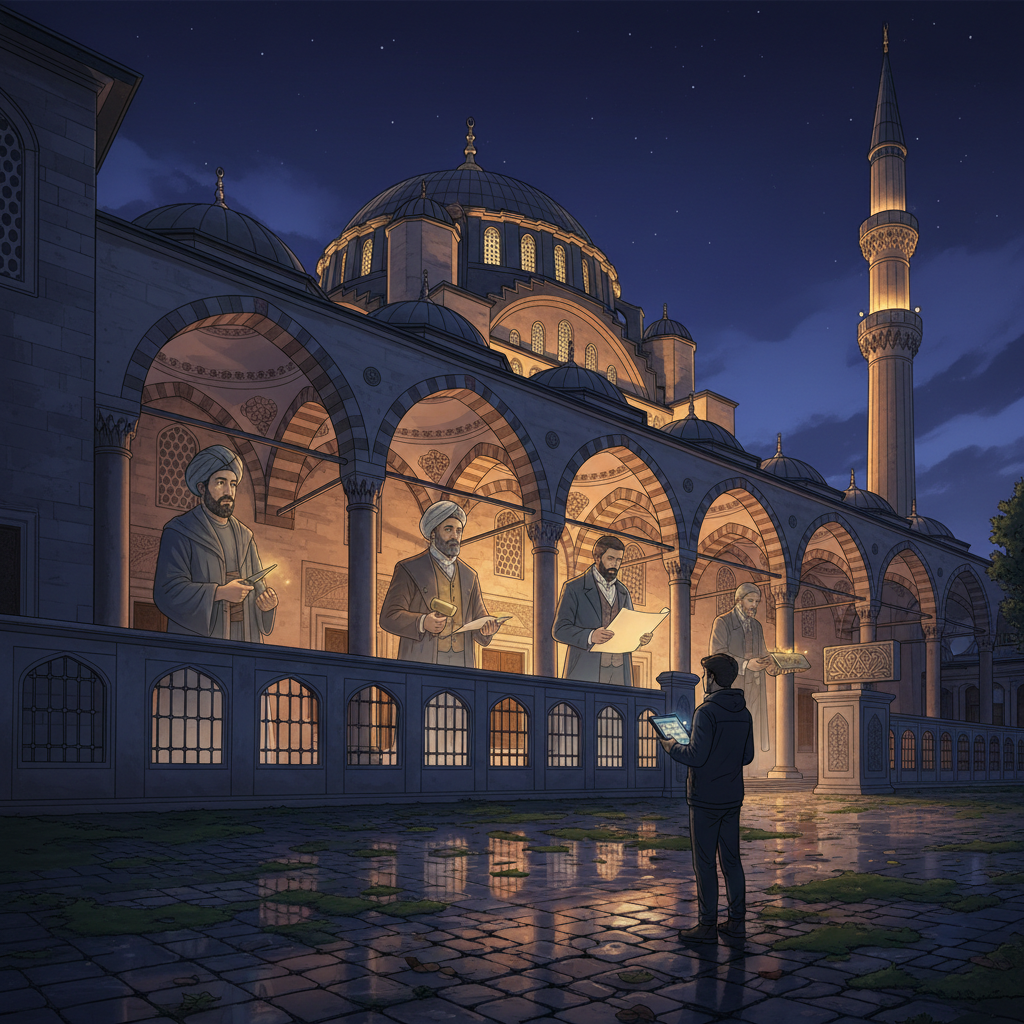
The Stone Architects of Eyüp Sultan Mosque: Tracing Forgotten Masters in 2026
The history of the Eyüp Sultan Mosque construction, one of the most important places of worship in Istanbul, is an epic journey reflecting the founding spirit and architectural genius of the Ottoman Empire. Even in this modern age of 2026, the depths of history resonate, inviting us to trace the footsteps of its forgotten masters.
Eyüp Sultan Mosque Construction Date: Tracing its History and Significance
The Eyüp Sultan Mosque Construction Date marks more than just the chronicle of a building; it's an epic journey reflecting the founding spirit and architectural genius of the Ottoman Empire. This significant place of worship, nestled in the spiritual heart of Istanbul and the Islamic world, continues to resonate with profound historical depth. Even in this modern age of 2026, the mosque's walls invite visitors on a mystical journey through time, offering insights into centuries of architectural evolution and spiritual devotion. For a deeper understanding of its continuous role, explore Eyüp Sultan Mosque in 2026: Unveiling the Secrets of Millennia-Old Pilgrimages and Visitations.
Foundation and Early Periods: The Eyüp Sultan Mosque Construction Date Begins
The foundations of the Eyüp Sultan Mosque were laid immediately after the conquest of Istanbul. Demonstrating his deep spiritual commitment, Fatih Sultan Mehmet prioritized finding the tomb of Abu Ayyub al-Ansari. Subsequently, he commissioned the construction of a mosque and a mausoleum over it. This decision was both a testament to spiritual loyalty and a strategic move, reinforcing the new capital's spiritual identity. Therefore, understanding the early stages is crucial to grasping the full Eyüp Sultan Mosque Construction Date.
Abu Ayyub al-Ansari and the Sacred Site Selection
Abu Ayyub al-Ansari, as the standard-bearer of Prophet Muhammad, met his martyrdom during the first siege for the conquest of Istanbul. His tomb remained lost until the Ottoman conquest. The discovery of the tomb by Akshamsaddin profoundly consecrated the location destined for the mosque. This selection undeniably elevated the spiritual importance of the mosque throughout subsequent centuries.
Fatih Sultan Mehmet's Vision and the First Mosque
Construction of the mosque began in 1458, by the direct order of Fatih Sultan Mehmet. It stands as one of the first major architectural endeavors in Istanbul following the conquest. The planning and execution of the mosque were meticulously entrusted to the era's most talented architects. Initially, the structure presented itself in a more modest, yet undeniably magnificent, form, differing significantly from the extensive kulliye (complex) we see today. Discover how this historical site continues to impact Childhoods Forged Around Eyüp Sultan Mosque in 2026.
The Eyüp Sultan Mosque's Place in Ottoman Architecture
Throughout its existence, the Eyüp Sultan Mosque Construction Date has been marked by numerous repairs and additions, yet its original spiritual essence has consistently been preserved. Within the broader developmental trajectory of Ottoman architecture, the Eyüp Sultan Mosque serves as a significant example, showcasing the elegance and simplicity characteristic of early Ottoman design. With the subsequent additions built in later periods, the mosque evolved, gaining the comprehensive character of a kulliye.
Classical Period Renovations and Mimar Sinan's Potential Influence
Over time, the mosque unfortunately suffered damage from natural disasters, including earthquakes and fires, necessitating extensive repairs. It is widely believed that certain renovations and additions occurred, particularly during the reign of Suleiman the Magnificent, and later, potentially under the influence of Mimar Sinan himself. However, definitive information regarding Sinan's direct involvement in the original construction of the Eyüp Sultan Mosque remains elusive. It is generally assumed that his contributions were more directed towards the broader kulliye, such as adding the arcaded courtyard. For detailed insights into its design, see 2026: The Vibrant Secrets of Eyüp Sultan Mosque – From Architectural Patterns to Artistic Reflections.
Ottoman Sultans' Unique Affection for Eyüp Sultan
The Eyüp Sultan Mosque held a uniquely revered position for Ottoman sultans. Historically, every new sultan performed the sword-girding ceremony at this sacred site before ascending the throne. This tradition profoundly reinforced the mosque's political as well as its spiritual importance. Consequently, these ceremonies ensured that the mosque garnered a privileged place in Ottoman history and tradition. Learn more about Eyüp Sultan Mosque in 2026: A Journey of State Ceremonies and Sultans from Ottoman Times to Today.
The 18th Century Renovation and Current Appearance of Eyüp Sultan Mosque
The mosque's impressive current appearance largely originates from the extensive renovation works undertaken in the late 18th century, during the reign of Selim III. The original structure, regrettably, had sustained severe damage due to previous earthquakes and general wear and tear over centuries. This period significantly impacted the Eyüp Sultan Mosque Construction Date and its architectural evolution.
Selim III's Restoration and Notable Architectural Changes
Selim III issued a decree for the mosque's complete demolition and subsequent rebuilding. This monumental reconstruction process, carried out between 1798 and 1800, coincided with a period when Baroque and Rococo architectural influences were notably integrating into Ottoman design. Due to these influences, the mosque's architecture partially diverged from its prior simple structure, instead adopting a more ornate and ostentatious appearance. This period marks a significant turning point in the Eyüp Sultan Mosque Construction Date and its evolving identity.
Architectural Identity and Artistic Contributions
While the precise identity of the architect responsible for this major restoration is not entirely known, it is clear that leading architects and artists of the period were involved. The intricate interior decorations, meticulous pen work, and exquisite tile details eloquently demonstrate the prevailing taste and artistic mastery of that era. Its mihrab, minbar, and sermon pulpit particularly stand out due to their rich and elaborate embellishments. The architectural details are well-documented by the Turkish Religious Affairs Foundation (Diyanet).
The Eyüp Sultan Mosque Complex and Surrounding Social Life
Beyond being merely a place of worship, the Eyüp Sultan Mosque, along with its developed complex, has served as a vibrant hub of social and cultural life for centuries. Madrasahs, imarets, hammams, and bazaars collectively created a dynamic living space around the mosque. As of 2026, this historical vibrancy still continues, at least in part, maintaining its unique atmosphere. For more on the mosque's overall impact, see Eyüp Sultan Mosque in 2026: Socioeconomic Transformations and Regional Impacts.
Functions of the Kulliye (Complex)
- Madrasah: This institution served as a vital educational center where Islamic sciences and other knowledge were taught.
- Imaret: Functioning as a charitable institution, the imaret was crucial for distributing food to the less fortunate.
- Hammams: These public baths were important venues not only for hygiene but also for social interaction and community gathering.
- Bazaar: The bazaar represented the economic heart of the region, functioning as a bustling meeting point for tradesmen and customers alike.
Eyüp Sultan and Istanbul's Social Memory
The Eyüp Sultan region has consistently held profound meaning for residents of Istanbul. It experiences a significant influx of visitors, particularly during Ramadan and on holy nights. The numerous cemeteries, revered mausoleums, and historic houses encircling the mosque underscore that this region is not solely a place of worship but also a thriving center of life and deeply rooted memory. Indeed, the Eyüp Sultan Mosque Construction Date has fundamentally shaped the development of this rich social fabric. For historical accounts, consult resources like the UNESCO World Heritage Centre on historic areas of Istanbul.
Current Importance and Future Projections (2026) for Eyüp Sultan Mosque
As of 2026, the Eyüp Sultan Mosque remains one of Istanbul's most frequented spiritual sites. Both local devotees and international tourists flock to this sacred location, embarking on journeys into history and spirituality. Ongoing efforts are dedicated to preserving the mosque and ensuring its legacy for future generations, continuing the story of the Eyüp Sultan Mosque Construction Date.
Restoration and Crucial Conservation Works
In recent years, substantial projects have been initiated for the preservation and restoration of the mosque and its surrounding complex structures. These crucial works, meticulously carried out utilizing advanced technological capabilities, aim to reinforce the structure without compromising its original historical texture. Ultimately, these endeavors seek to transmit this invaluable heritage to future generations, ensuring the continued value accumulated throughout the extensive Eyüp Sultan Mosque Construction Date. More details on these efforts can be found on cultural heritage sites like ICOMOS.
Spirituality and Expanding Tourism Potential
The Eyüp Sultan Mosque also holds immense potential for Istanbul's faith tourism sector. Visitors have the profound opportunity to pray at the revered tomb of Abu Ayyub al-Ansari, find solace in the mosque's tranquil spiritual atmosphere, and actively trace the rich footsteps of Ottoman history. With targeted promotional activities being implemented in 2026, the aim is to further enhance and expand this potential, attracting more visitors. Dive into the spiritual atmosphere with Ramadan Under the Shadows of Eyüp Sultan Mosque: A Revival of Tradition in 2026.
Eyüp Sultan in the Evolving Digital Age
With the rapid advancement of technology today, the volume of content discussing the Eyüp Sultan Mosque and its comprehensive complex is steadily increasing across various digital platforms. Through engaging virtual tours, informative documentaries, and vibrant social media shares, the mosque's compelling story and profound importance reach progressively wider audiences. This ongoing digitalization plays a pivotal role in disseminating information about the rich Eyüp Sultan Mosque Construction Date to a broader global audience. Find out more about Eyüp Sultan Mosque's Communication Legacy in 2026: Bridging Calligraphers to Social Media.
In conclusion, the Eyüp Sultan Mosque Construction Date narrates a profoundly rich past, encompassing deeply intertwined themes of faith, architectural brilliance, and enduring cultural heritage. This narrative spans from the pivotal conquest of Istanbul right up to the present day. This sacred place, with a unique story embedded in every brick and a profound depth in every corner, continues to open the doors of its magnificent heritage to visitors in 2026 and beyond.
Sıkça Sorulan Sorular
What is the significance of the Eyüp Sultan Camii's construction history in 2026?
In 2026, the construction history of the Eyüp Sultan Camii continues to be a vital record of the Ottoman Empire's foundational spirit and architectural brilliance. It showcases centuries of architectural evolution and spiritual devotion, reflecting the mosque's deep spiritual and historical importance in Istanbul and the broader Islamic world. The mosque connects modern visitors with its profound past.
When did the construction of the Eyüp Sultan Mosque begin?
The construction of the Eyüp Sultan Mosque began in 1458, directly following the conquest of Istanbul. Fatih Sultan Mehmet ordered its construction as one of the first major architectural projects in the newly conquered city. This early construction included both a mosque and a mausoleum over the rediscovered tomb of Abu Ayyub al-Ansari.
Who was Abu Ayyub al-Ansari and why is his tomb important to the Eyüp Sultan Mosque?
Abu Ayyub al-Ansari was the standard-bearer of Prophet Muhammad, martyred during the first siege of Constantinople. His tomb, lost until the Ottoman conquest, was rediscovered by Akshamsaddin. This discovery profoundly sanctified the site, leading Fatih Sultan Mehmet to build the mosque and mausoleum there, significantly elevating the spiritual importance of the location for centuries.
How did Fatih Sultan Mehmet influence the mosque's initial construction?
Fatih Sultan Mehmet played a pivotal role by directly ordering the mosque's construction immediately after the conquest of Istanbul. His vision included building a mosque and a mausoleum over Abu Ayyub al-Ansari's tomb, which was both a spiritual tribute and a strategic move to establish Istanbul's new spiritual identity. He entrusted the project to the most talented architects of the era.