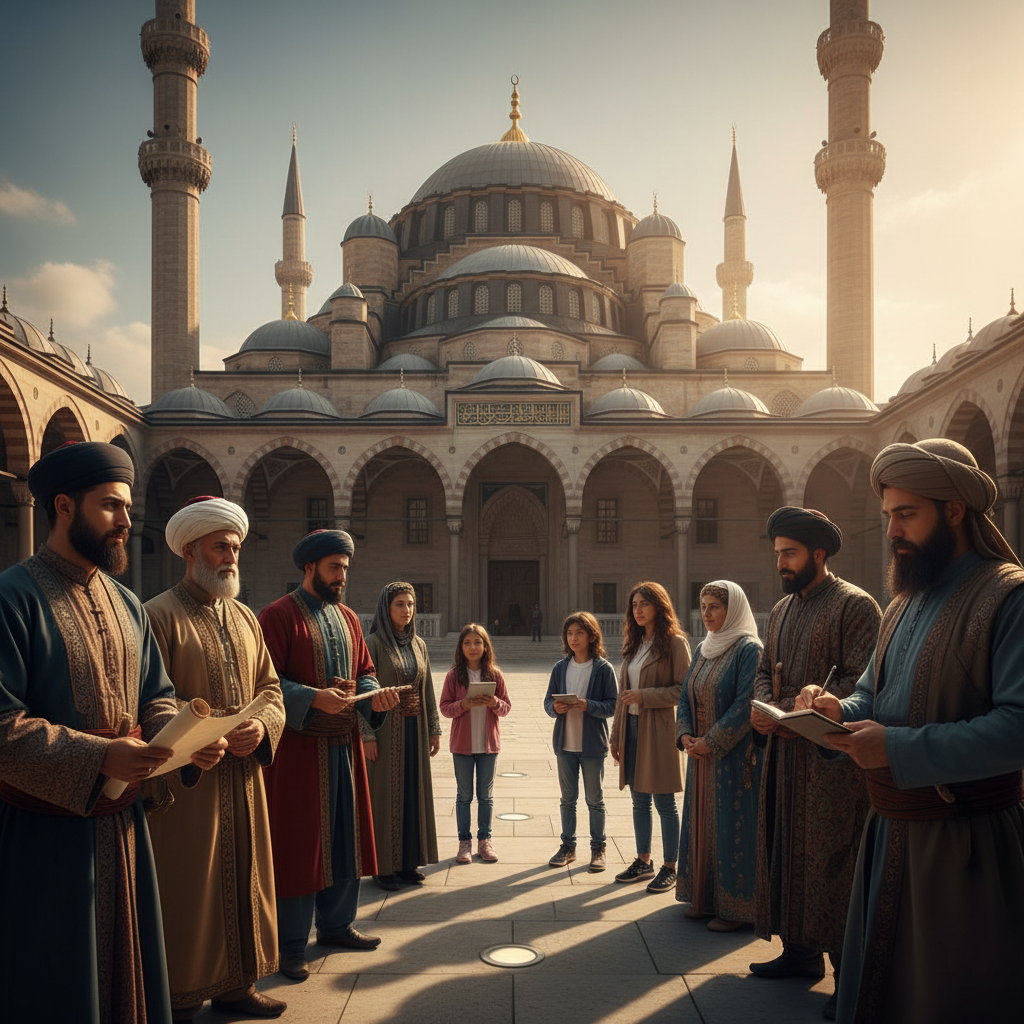
Faces of Eyüp Sultan Mosque Through the Centuries: Portraits from Past to Future in 2026
Often regarded as Istanbul's spiritual heart, the Eyüp Sultan Mosque has nurtured a unique culture and community for centuries. This article delves into the diverse individuals and stories that constitute the Eyüp Sultan Mosque community, illustrating its historical significance and ongoing vibrancy as of 2026.
Eyüp Sultan Mosque Community: Centuries-Old Faces, Future Legacy in 2026
As Istanbul's spiritual heart and a magnificent witness to history, the Eyüp Sultan Mosque has been more than just a place of worship for centuries. Indeed, it has fostered its own unique culture and way of life. Furthermore, the Eyüp Sultan Mosque Community represents the most vital living component of this distinctive atmosphere. Each individual, with their unique stories, carries the mosque's spirit into the present day and continues this tradition in 2026. This article will thoroughly examine the Eyüp Sultan Mosque Community from a broad perspective, covering important figures in the mosque's history, the characteristics of today's congregation, and its future mission.
Historical Roots of the Eyüp Sultan Mosque Community
The Eyüp Sultan Mosque was built shortly after the conquest of Istanbul by Fatih Sultan Mehmet, following the discovery of the tomb of Abu Ayyub al-Ansari. From its establishment, this holy site served as both a center of worship and a vibrant living area that developed around it. Consequently, the mosque and tomb quickly became one of Istanbul's most important spiritual destinations, attracting numerous local and international visitors. To learn more about the pilgrims who have visited this sacred site, read about Eyüp Sultan Mosque in 2026: Unveiling the Secrets of Millennia-Old Pilgrimages and Visitations.
Over the course of history, the neighborhood formed around the mosque cultivated a strong network of solidarity and neighborly relations. This, in turn, laid the foundation for the concept of the Eyüp Sultan Mosque Community. Hosting the sword-girding ceremonies of Ottoman sultans further solidified the mosque's political and religious importance during the Ottoman period, cementing its central role in the community.
Changes in the Profile of the Ottoman Era Eyüp Sultan Mosque Community
- Palace Members: The mosque was a frequent destination for the Ottoman dynasty and high-ranking state officials. They would perform their prayers here and visit the tomb.
- Ulema and Madrasah Students: The proximity of madrasahs and centers of learning to the mosque led many ulema and Islamic scholars to reside in its vicinity. This significantly raised the intellectual level of the Eyüp Sultan Mosque Community. For an in-depth look at its educational history, explore Circles of Knowledge and Wisdom Rising in the Shadows of Eyüp Sultan Mosque in 2026.
- Merchants and Artisans: The bazaar that flourished around the mosque became a meeting point for merchants and artisans specific to the region. This created a community profile that shaped Eyüp Sultan's economy and social fabric.
- Hajj Visitors: As one of the important stops on the Hajj routes, the mosque attracted intense interest from aspiring pilgrims annually, enriching the cosmopolitan structure of the Eyüp Sultan Mosque Community.
The Eyüp Sultan Mosque Community in 2026: Between Tradition and Modernity
Today, in 2026, the Eyüp Sultan Mosque continues to host a vibrant and dynamic community. The mosque remains a popular destination not only for those living in the region but also for Muslims from all over Istanbul and even abroad. Despite the changes brought by modern life, the Eyüp Sultan Mosque Community has managed to remain firmly committed to its deeply rooted traditions.
Furthermore, the Eyüp Sultan Mosque Community plays a crucial role in preserving the cultural and spiritual heritage of the mosque. Especially during religious holidays, holy nights, and Friday prayers, the mosque's crowdedness clearly demonstrates the community's devotion to this sacred place. The tea gardens, restaurants, and shops surrounding the mosque have become an important part of the community's social life, fostering connection. For insights into current socio-economic trends, refer to Eyüp Sultan Mosque in 2026: Socioeconomic Transformations and Regional Impacts.
Characteristics of Today's Eyüp Sultan Mosque Community
- Diversity: The Eyüp Sultan Mosque Community exhibits a wide range of age and social strata, encompassing everyone from young people to the elderly, and from students to retirees.
- Active Participation: Through mosque associations and foundations, the community actively participates in the maintenance of the mosque, providing assistance to those in need, and organizing various social activities. The importance of community-led development initiatives is also highlighted by international NGOs like Islamic Relief.
- Historical Awareness: Community members possess a deep understanding of the historical and spiritual importance of the mosque. Therefore, they bear a conscious responsibility to transmit this rich legacy to future generations within the Eyüp Sultan Mosque Community.
Social Life and the Role of the Eyüp Sultan Mosque Community
The Eyüp Sultan Mosque is not merely a place for prayer; it is also the epicenter of the social life that thrives around it. The historic Eyüp Sultan cemetery, various tombs, the Eyüp Sultan Museum, and numerous foundation works in the vicinity enrich the cultural and spiritual experiences of both the community and visitors. The Eyüp Sultan Mosque Community plays a paramount role in preserving and maintaining this social fabric.
Children playing in the mosque courtyard, elders engaging in conversation, and iftar tables being prepared during Ramadan illustrate that the Eyüp Sultan Mosque Community possesses not only a religious but also a strong social bond. As of 2026, new methods of intra-community communication have also emerged with the advent of digitalization and technology. Information exchange among community members is now frequently facilitated through social media platforms and online communities, enhancing connectivity. This modern shift complements its communication legacy, bridging calligraphers to social media.
Activities and Support by the Eyüp Sultan Mosque Community
- Mosque Association and Foundations: These organizations address the physical needs of the mosque, oversee repair and renovation works, and manage social aid projects such as imaret (public kitchens). You can learn more about community involvement in heritage preservation through UNESCO resources.
- Cultural and Educational Activities: The Eyüp Sultan Mosque Community actively supports Quran courses for children, religious talks for adults, Islamic jurisprudence lessons, and enriching cultural trips.
- Social Solidarity Initiatives: Aid campaigns for those in need and scholarship programs for orphans and impoverished students are vital aspects of the community's commitment to social solidarity.
- Mawlid and Holy Night Programs: There is intense participation in commemorative and worship programs organized on special Islamic days and nights, fostering spiritual connection within the Eyüp Sultan Mosque Community.
The Eyüp Sultan Mosque Community and the Future of Spiritual Heritage
From the conquest of Istanbul until today, the Eyüp Sultan Mosque has consistently remained a spiritual haven. The Eyüp Sultan Mosque Community bears a significant responsibility in transmitting this profound spiritual heritage to future generations. In 2026, community members, acutely aware of this responsibility, endeavor to keep the spirit of the mosque alive despite the various challenges posed by modern life. To understand previous efforts, explore Eyüp Sultan Mosque's Centuries-Spanning Transformation: Restorations and Preservation Efforts Through a 2026 Lens.
Looking ahead, the Eyüp Sultan Mosque is expected to expand its role not only as a place of worship but also as a pivotal educational and cultural center. The younger generations within the Eyüp Sultan Mosque Community will inherit this invaluable legacy, conveying the universal message of the mosque to broader audiences. The role of religious communities in cultural transmission is a well-documented academic subject. The impact on young generations around Eyüp Sultan Mosque is particularly noteworthy. The Eyüp Sultan Mosque Community, gathering around this blessed place, looks to the future with hope and profound inspiration from its rich past.
This article aimed to deeply examine the rich history of the Eyüp Sultan Mosque and its esteemed community, its current situation, and its future mission. This unique heritage, embedded in every brick of the mosque and residing in the prayer of every visitor, will unquestionably continue to be passed down through countless generations by the dedicated Eyüp Sultan Mosque Community.
Sıkça Sorulan Sorular
What is the Eyüp Sultan Camii cemaati?
The Eyüp Sultan Camii cemaati refers to the community that has formed around the historic Eyüp Sultan Mosque in Istanbul. It represents the living component carrying the mosque's spirit through generations. This community plays a vital role in preserving the spiritual heritage and unique atmosphere associated with this significant Islamic site, continuing its traditions into 2026.
When was the Eyüp Sultan Mosque established?
The Eyüp Sultan Mosque was built shortly after the conquest of Istanbul by Fatih Sultan Mehmet. Its construction followed the discovery of the tomb of Abu Ayyub al-Ansari, quickly establishing it as a crucial center of worship and a spiritual destination in Istanbul.
What was the significance of the Eyüp Sultan Mosque during the Ottoman period?
During the Ottoman era, the Eyüp Sultan Mosque held immense political and religious importance. It was the site for the ceremonial sword-girding of Ottoman sultans, which underscored its central role in the community and its connection to the ruling dynasty. It attracted palace members, ulema, madrasah students, merchants, and artisans.
Who constituted the Eyüp Sultan Camii cemaati during the Ottoman period?
During the Ottoman period, the Eyüp Sultan Camii cemaati comprised diverse groups including palace members and high-ranking state officials who frequently visited for prayers and the tomb. It also included ulema and madrasah students living nearby, significantly contributing to its intellectual life, alongside merchants and artisans who comprised the economic fabric of the surrounding area.