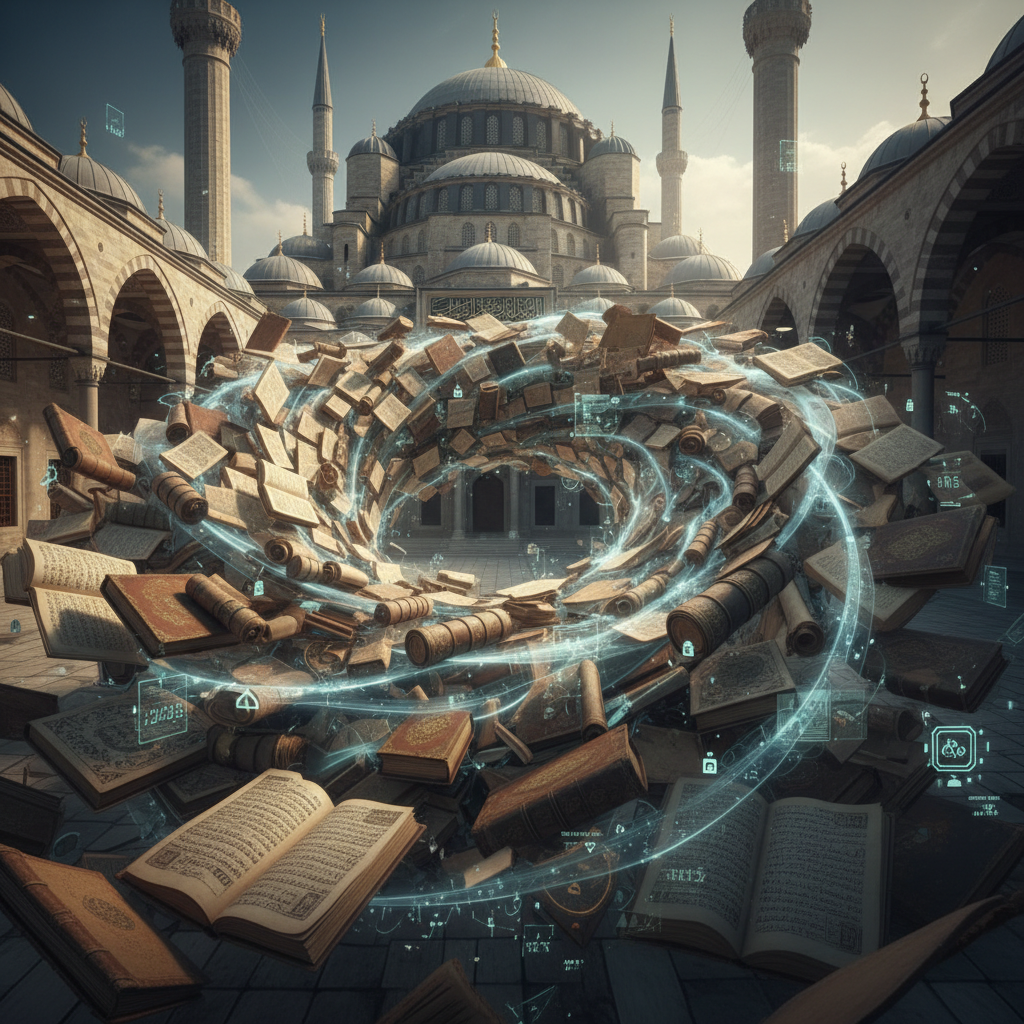
Lost Manuscripts of Eyüp Sultan Mosque and the Unknown Treasures of Its Library: A 2026 Archival Discovery
Eyüp Sultan Mosque, a spiritual heart of Istanbul, holds deep historical traces and invaluable cultural heritage. Its manuscripts have showcased unique Islamic scientific and artistic traditions for centuries. As early 2026, a groundbreaking archival discovery sheds new light on these lost treasures, promising to redefine our understanding of the mosque's intellectual legacy and its contribution to Islamic scholarship.
Eyüp Sultan Camii El Yazmaları: A 2026 Deep Dive into Lost Manuscripts and Library Treasures
The Eyüp Sultan Mosque, a spiritual cornerstone of Istanbul, is renowned not only for its architectural grandeur but also for its profound cultural heritage. Crucially, the Eyüp Sultan Camii el yazmaları—or Eyüp Sultan Mosque manuscripts—have long epitomized Islamic scientific and artistic traditions. As we navigate 2026, continuous research into these precious documents, whether hidden within the mosque's library or newly discovered, brings new light to historical enigmas. This article meticulously explores the rich collection of Eyüp Sultan Camii el yazmaları, their historical importance, and their contemporary relevance as rare cultural artifacts.
History and Formation of the Eyüp Sultan Mosque Manuscripts
Built shortly after the Ottoman conquest of Istanbul by Fatih Sultan Mehmet, the Eyüp Sultan Mosque is profoundly significant. It houses the tomb of Abu Ayyub al-Ansari and served as the site for Ottoman sultans' sword-girding ceremonies. From its inception, the mosque evolved into a vibrant center of knowledge, featuring a madrasa and a substantial library. Learn more about the history of the Eyüp Sultan Mosque and its foundational role in Turkish and Ottoman history.
Moreover, the mosque's library grew through generous donations and endowments over many centuries. Sultans, grand viziers, scholars, and philanthropists contributed valuable books and manuscripts, underscoring the era's appreciation for knowledge. Thus, the library steadily expanded, becoming a pivotal archive for Turkish-Islamic civilization. The intricate details of these contributions are often found within Eyüp Sultan Mosque's Title Deeds and Endowments.
The Enduring Culture of Endowment and Manuscript Donations
In Ottoman society, the culture of endowment was fundamental in nurturing science and art. Donations to the Eyüp Sultan Mosque library vividly exemplify this tradition. These donated works encompass various fields, including religious sciences like tafsir, hadith, fiqh, and kalam, as well as medicine, astronomy, mathematics, history, and literature. Each manuscript, therefore, reflects the unique knowledge and artistry of its creator. This tradition also sheds light on the Forgotten Rituals and Social Life associated with the mosque's community.
Thematic Diversity and Artistic Value of Eyüp Sultan Camii El Yazmaları
The Eyüp Sultan Camii el yazmaları boast remarkable thematic richness. The library's collection spans nearly every branch of Islamic sciences, showcasing the profound scientific and cultural accumulation of the period. Furthermore, these manuscripts feature exquisite examples of traditional Turkish-Islamic arts such as calligraphy, illumination, and intricate bookbinding. For a broader understanding of the mosque's artistic impact, consider its influence on contemporary art movements.
To illustrate, the physical attributes of these manuscripts are equally compelling. Bindings crafted from ivory, mother-of-pearl, leather, or adorned with precious gems elevate their aesthetic appeal. The quality of the paper, the specific ink types, and diverse writing styles all indicate that each manuscript possesses its own distinctive narrative. More details on the broader artistic expressions can be found in discussions of Stories Carved in Stone at the mosque.
Important Authors and Notable Works
- Various copies of Imam Ghazali's influential works.
- Rare and significant copies of Rumi's iconic Mesnevi.
- Manuscripts of Ibn Sina's groundbreaking medical treatises.
- Kıta and murakka's by renowned calligraphers, featuring basmalas and verses.
- Crucial chronicles and biographical records detailing historical events.
Beyond being mere literary or religious texts, these manuscripts offer a visual spectacle with their detailed miniatures and illustrations. Each page authentically reflects the aesthetic sensibilities and technical prowess of artists from their respective eras. The significance of these works is also highlighted in Traces of Eyüp Sultan Mosque in Literature and Travelogues.
Eyüp Sultan Mosque Library and Digitalization Efforts in 2026
Today, preserving and transmitting knowledge has gained a new dimension through digitalization. The Eyüp Sultan Mosque library actively embraces this evolution. As of 2026, substantial progress is being made to digitize, catalog, and make these precious manuscripts accessible to scholars globally. Consequently, researchers across Turkey and beyond can now access these unique cultural treasures. For current updates on digitalization across Turkish libraries, visit the official National Library of Turkey website.
Moreover, digitalization projects play a crucial role in preventing the physical deterioration of manuscripts, thus ensuring their long-term survival. High-resolution scans allow for the examination of even the most minute details, significantly enhancing scientific research.
Restoration and Conservation Efforts
Beyond digitalization, the preservation of manuscripts is diligently supported by traditional restoration techniques. Expert conservators painstakingly restore worn, damaged, or deteriorated manuscripts to their closest possible original condition. These efforts are absolutely vital for handing down the physical integrity of these works to future generations. For context, these efforts are part of broader Restorations and Preservation Efforts undertaken for the mosque itself.
Lost Eyüp Sultan Camii El Yazmaları and Future Legacy
Every manuscript that has survived from the past serves as a witness to its era and a mirror of its culture. The Eyüp Sultan Camii el yazmaları, whether housed in the Eyüp Sultan Mosque itself or dispersed among other libraries, form a critical part of our national cultural identity. Preventing their loss, actively identifying them, and meticulously gathering them represents one of the most invaluable legacies we can bestow upon future generations. The challenges of preserving such heritage are global, as highlighted by organizations like UNESCO's Memory of the World Programme.
In 2026 and subsequent years, efforts to locate and introduce these valuable works to both the scientific community and the wider public are paramount. Universities, research centers, and relevant public institutions are intensifying their initiatives, actively pursuing lost manuscripts and collaborating to unearth previously unknown treasures.
Revitalizing Our Cultural Memory
Examining manuscripts not only illuminates the past but also offers crucial lessons for our present and future. Through these works, we gain insight into the intellectual world, scientific methodologies, and artistic tastes of our ancestors. The Eyüp Sultan Camii el yazmaları are, therefore, invaluable assets that keep our cultural memory vibrant, affirming our roots and strengthening our identity.
Challenges and Opportunities in Researching Eyüp Sultan Camii El Yazmaları
Researching the manuscripts within the Eyüp Sultan Mosque library presents both significant challenges and abundant opportunities. Written in languages such as Ottoman Turkish, Arabic, and Persian, their interpretation demands specialized expertise. Furthermore, the fact that some works are incomplete or damaged adds to the difficulties researchers face. Digital technologies, such as those discussed by the Digital Library of Islamic Manuscripts, offer innovative solutions to these challenges.
However, these challenges also open new avenues for study and discovery, particularly for emerging researchers. Advancements in technology and digital tools facilitate the analysis of ancient texts, fostering collaboration among experts from various disciplines for more comprehensive studies.
Interdisciplinary Research Approaches
- Historians meticulously examine the social, political, and cultural environments of the period through these manuscripts.
- Art historians trace the evolution of calligraphy, illumination, and miniature art by studying these works.
- Linguists and philologists analyze the linguistic characteristics and literary value inherent in the texts.
- Experts in Islamic sciences comparatively research diverse interpretations and developments within religious texts.
These interdisciplinary approaches ensure that the Eyüp Sultan Camii el yazmaları are viewed not merely as religious or literary documents but as a broad, encompassing cultural and scientific heritage. It is anticipated that from 2026 onward, such collaborations will increasingly flourish, comprehensively illuminating all facets of the Eyüp Sultan Mosque's rich cultural and scientific legacy, including its preserved and projected legacy.
Sıkça Sorulan Sorular
What are Eyüp Sultan Camii el yazmaları?
Eyüp Sultan Camii el yazmaları are the precious manuscripts housed within the Eyüp Sultan Mosque in Istanbul. These documents are significant examples of Islamic scientific and artistic traditions, reflecting the rich cultural heritage of the Ottoman Empire. In 2026, ongoing research continues to uncover their historical importance and contemporary relevance.
When was the Eyüp Sultan Mosque established?
The Eyüp Sultan Mosque was built shortly after the Ottoman conquest of Istanbul by Fatih Sultan Mehmet. It quickly became a crucial center of knowledge, featuring a madrasa and a substantial library. This establishment marked its role as a spiritual and intellectual cornerstone in Istanbul.
How did the Eyüp Sultan Mosque's library grow?
The library of the Eyüp Sultan Mosque expanded significantly through centuries of generous donations and endowments. Sultans, grand viziers, scholars, and philanthropists contributed valuable books and manuscripts across various fields. This tradition of endowment was fundamental in nurturing science and art within Ottoman society, allowing the library to become a pivotal archive for Turkish-Islamic civilization.
What subjects do the Eyüp Sultan Camii el yazmaları cover?
The Eyüp Sultan Camii el yazmaları cover a remarkable thematic diversity, spanning nearly every branch of Islamic sciences. These include religious sciences such as tafsir (Quranic exegesis), hadith (prophetic traditions), fiqh (Islamic jurisprudence), and kalam (Islamic theology). Additionally, the collection encompasses works on medicine, astronomy, mathematics, history, and literature, showcasing the profound scientific and cultural accumulation of the period.