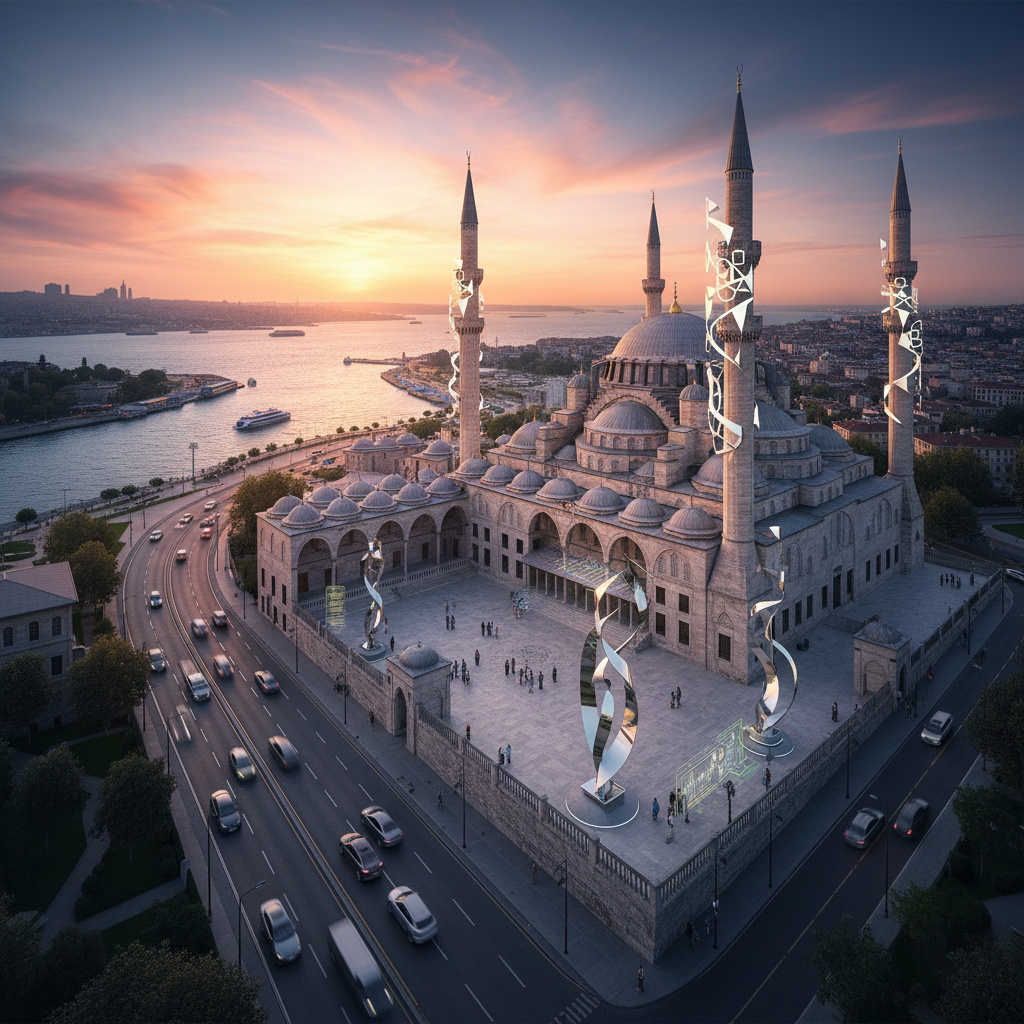
Eyüp Sultan Mosque in 2026: Stories Rising from its Minaret and Contemporary Art Movements
The Eyüp Sultan Mosque, Istanbul's spiritual heart, has for centuries captivated visitors with its architecture, decorations, and sacred relics. This article delves into the depths of this iconic structure, meticulously examining its past and current significance in 2026, exploring its art history, evolving artistic influences, and its enduring role as a cultural beacon.
Art History of Eyüp Sultan Mosque: Architecture & Art
The Art History of Eyüp Sultan Mosque is a captivating journey through centuries of Ottoman design and spirituality. This iconic structure, often considered the spiritual heart of Istanbul, has consistently drawn visitors with its striking architecture, intricate decorations, and sacred relics. Examining its past and current significance in 2026 reveals a unique cultural heritage, making the Art History of Eyüp Sultan Mosque a fascinating subject.
Architectural Features and Artistic Identity of Eyüp Sultan Mosque
The Eyüp Sultan Mosque stands as a prime example of early Ottoman architecture, yet it also showcases artistic elements from various periods due to extensive renovations. Its general layout adheres to classical Ottoman mosque design, featuring a central prayer hall, typically square or rectangular, enveloped by a porticoed courtyard. However, the architectural details often reveal a fascinating blend of early simplicity with later Baroque and Rococo influences, demonstrating its evolution through time. The Art History of Eyüp Sultan Mosque is deeply intertwined with these architectural developments. For a deeper understanding of its structure, explore more about Eyüp Sultan Mosque: Stories Carved in Stone – A Look from 2026.
Influence of Mimar Sinan and Subsequent Eras on Eyüp Sultan Mosque
While Sultan Selim III rebuilt the current mosque structure in the late 18th century, the initial mosque was established during the reign of Sultan Mehmed the Conqueror. Mimar Sinan, the revered Ottoman architect, is historically associated with the planning of this original structure and some surrounding additions. Due to fires and earthquakes, the mosque has undergone numerous repairs throughout its long history. Notably, the comprehensive renovation under Selim III endowed the mosque with the opulent Baroque and Rococo decorative styles visible today. This period is crucial to understanding the full Art History of Eyüp Sultan Mosque. To learn more about the complete timeline, refer to Eyüp Sultan Mosque: Its History and Architectural Secrets.
Interior Decorations and Artistic Value of Eyüp Sultan Mosque
The mosque's interior decorations beautifully reflect the aesthetic sensibilities of its era. The exquisite tile work, delicate pen work, and masterful calligraphic art adorning the walls are invaluable to the Art History of Eyüp Sultan Mosque. Specifically, the intricate craftsmanship on the mihrab (prayer niche) and minbar (pulpit) represents the pinnacle of Ottoman artistry. The soft light filtering through colorful stained-glass windows further enhances the interior's mystical and serene atmosphere. These details are key to appreciating the rich Art History of Eyüp Sultan Mosque.
- Exquisite 18th-century İznik tiles adorn the walls.
- Rich pen work decorations embellish the domes and vaults.
- Valuable calligraphic panels, crafted by master calligraphers, add to its spiritual depth.
- Examples of intricate wood carving enhance various architectural elements.
Eyüp Sultan Tomb: Spirituality Reflected in the Art History of Eyüp Sultan Mosque
Within the mosque complex, the tomb of Ebu Eyyûb el-Ensârî is a structure of immense importance, combining spiritual reverence with exceptional artistic richness. The tomb's interior decorations share a similar aesthetic with the main mosque but maintain their own distinct style. The impressive tile work and calligraphic inscriptions on the tomb walls consistently captivate visitors. Moreover, the courtyard and entrance gate of the tomb are adorned with meticulously crafted stone masonry, all contributing to the broader Art History of Eyüp Sultan Mosque.
Legacy of Ebu Eyyûb el-Ensârî and Artistic Impact on Eyüp Sultan Mosque
The presence of Ebu Eyyûb el-Ensârî in Istanbul profoundly shaped the spiritual identity of the region, and indeed, Ottoman Istanbul as a whole. This spiritual aura directly influenced the artistic construction of both the mosque and the tomb. Every meticulously crafted detail reflects a deep reverence for this revered figure. Truly, the profound spiritual dimension is an integral part of understanding the Art History of Eyüp Sultan Mosque. Discover more about Eyüp Sultan Mosque and Its Mysterious Figures: Embark on a Discovery in 2026.
- Unique tile panels are prominently featured in the tomb's porticoes.
- Rare works by esteemed Ottoman calligraphers are preserved within.
- The silver-grilled sarcophagus inside the tomb is a focal point of reverence.
- Mother-of-pearl inlay craftsmanship adorns the tomb doors, showcasing exquisite detail.
Contemporary Trends in the Art History of Eyüp Sultan Mosque
The reconstructed Eyüp Sultan Mosque vividly reflects the evolving trends in Ottoman architectural and decorative art, particularly from the late 18th and early 19th centuries. This period marked a significant transitional era, witnessing the harmonious blend of European Baroque and Rococo influences with traditional Ottoman artistic expressions. The mosque beautifully illustrates how these Western styles were thoughtfully interpreted and integrated within the framework of Turkish-Islamic art, enriching the Art History of Eyüp Sultan Mosque.
Traces of Ottoman Baroque and Rococo Styles in Eyüp Sultan Mosque
The characteristic curved lines, exquisite vegetal motifs, and intricate decorations found throughout the mosque's ornamentation are hallmarks of both Baroque and Rococo styles. While these styles predominantly adorned secular buildings in Europe, they skilfully found their place in Ottoman religious structures, including mosques and tombs. However, this adaptation resulted in an original synthesis, uniquely crafted by Ottoman artists. The vital role of Eyüp Sultan Mosque in this artistic evolution holds a significant position within the literature of the Art History of Eyüp Sultan Mosque. For further reading on Baroque and Rococo influences, consider this overview of Baroque art on The Metropolitan Museum of Art website.
- Rich Baroque pen work decorates the domes.
- Rococo decorations are evident on the mihrab and minbar.
- Detailed carvings enhance the courtyard fountains.
Recent History and Conservation Efforts for Eyüp Sultan Mosque (2026)
As we navigate 2026, the careful conservation, restoration, and effective transmission of the Eyüp Sultan Mosque and its surrounding area to future generations remain paramount. Recent and ongoing restoration projects are precisely aimed at preserving the structure's original fabric while simultaneously enhancing the visitor experience. These dedicated efforts are crucial in safeguarding both the profound religious and significant artistic heritage of the mosque, further contributing to the ongoing Art History of Eyüp Sultan Mosque.
Modern Restoration Techniques and Heritage Management for Eyüp Sultan Mosque
Contemporary restoration techniques involve a meticulous, scientific examination of every element of the structure, ensuring the most appropriate conservation methods are employed. Key aspects of this process include microclimate control systems, advanced seismic strengthening, and carefully preserving original materials. These sophisticated endeavors also play a critical role in preserving invaluable documentation for the evolving Art History of Eyüp Sultan Mosque. You can find more information on modern conservation practices from organizations like ICOMOS (International Council on Monuments and Sites).
Digitalization and Eyüp Sultan Mosque in 2026
In 2026, digital tools are being effectively utilized to present the artistic and historical grandeur of Eyüp Sultan Mosque to a global audience. Through innovative virtual tours, detailed 3D models, and comprehensive digital archives, the mosque's unique art and architecture are becoming more widely accessible. This technological integration bridges the past and present, making the mosque's rich heritage approachable to wider audiences than ever before, and expanding the reach of the Art History of Eyüp Sultan Mosque.
Current Cultural and Artistic Significance of Eyüp Sultan Mosque
The Eyüp Sultan Mosque transcends its roles as merely a place of worship or a historical building; it embodies a vibrant, living cultural and artistic hub. Today, in conjunction with the surrounding Eyüp district, it stands as one of Istanbul's most frequently visited spiritual and tourist destinations. Annually, thousands of individuals visit to find spiritual solace and to intimately experience the intricate beauty of Ottoman art, which is central to the Art History of Eyüp Sultan Mosque.
Eyüp Sultan Mosque and Art Education
The mosque and its adjacent cultural centers actively host workshops dedicated to traditional Turkish-Islamic arts such as calligraphy, marbling (ebru), and illumination (tezhip). These invaluable workshops bridge the artistic heritage of the past with the present, ensuring its continuous transmission to younger generations. Consequently, the Art History of Eyüp Sultan Mosque is not merely a bygone era, but a dynamic and ongoing process. For a glimpse into its enduring legacy, see Eyüp Sultan Mosque's 2026 Time Tunnel: Preserving and Projecting its Legacy.
Social Role and Contribution to Tourism of Eyüp Sultan Mosque
Serving as a crucial social gathering point, the Eyüp Sultan Mosque draws large crowds during religious holidays, special days, and Friday prayers. As an indispensable stop for international tourists visiting Istanbul, the mosque significantly bolsters Turkey's cultural promotion. This vital role effectively reinforces both the religious and touristic identity of this magnificent landmark, highlighting its importance in the Art History of Eyüp Sultan Mosque.
In conclusion, the expansive Art History of Eyüp Sultan Mosque extends far beyond the architectural and decorative elements of a single mosque. Instead, it serves as a profound mirror, reflecting the spiritual, cultural, and artistic transformations that defined the Ottoman Empire. In 2026, this sacred and artistic sanctuary continues its journey, meticulously upholding its rich history while enthusiastically embracing the opportunities of the modern world. This extraordinary structure, which encapsulates the very soul of Istanbul, will undoubtedly continue to inspire for countless generations to come, solidifying its place in the Art History of Eyüp Sultan Mosque.
Sıkça Sorulan Sorular
What is the Eyüp Sultan Camii known for in 2026?
In 2026, the Eyüp Sultan Camii is celebrated for its profound art history, showcasing centuries of Ottoman design and spirituality. It's considered the spiritual heart of Istanbul, attracting visitors with its striking architecture, intricate decorations, and sacred relics, all contributing to its unique cultural heritage.
What architectural styles can be observed in the Eyüp Sultan Mosque?
The Eyüp Sultan Mosque primarily exemplifies early Ottoman architecture, yet its long history of renovations has introduced a blend of styles. Visitors in 2026 can observe original classical Ottoman elements alongside later Baroque and Rococo influences in its design and decorative details, reflecting its evolution through various eras.
Who rebuilt the current structure of the Eyüp Sultan Mosque?
The current structure of the Eyüp Sultan Mosque was notably rebuilt under Sultan Selim III in the late 18th century. While the initial mosque was founded during Sultan Mehmed the Conqueror's reign, and Mimar Sinan had historical associations with its planning, Selim III's comprehensive renovation infused the mosque with the opulent Baroque and Rococo decorative styles seen today.
What kind of interior decorations are prominent within the Eyüp Sultan Mosque?
The Eyüp Sultan Mosque's interior boasts exquisite decorations that highlight the artistic sensibilities of its time. Prominent features include intricate 18th-century İznik tiles, delicate pen work embellishing domes and vaults, and masterful calligraphic art. The mihrab and minbar, in particular, showcase the pinnacle of Ottoman artistry, enhanced by soft light from stained-glass windows.