Eyüp Sultan Mosque: Its History and Architectural Secrets
Explore the profound history, unique architecture, and spiritual atmosphere of Eyüp Sultan Mosque, Istanbul's sacred heart. Discover the secrets of this Ottoman masterpiece and its significance in Turkish culture and faith.
Eyüp Sultan Mosque: History, Architecture, and Spiritual Significance
The Eyüp Sultan Mosque, the spiritual heart of Istanbul, is a unique structure where faith and history intertwine. Built by Fatih Sultan Mehmet after his conquest of Istanbul, this sacred place has witnessed many significant events from the founding of the Ottoman Empire to the present day. Affecting visitors deeply with both its architecture and its spiritual atmosphere, Eyüp Sultan Mosque is not just a place of worship but also a monument of history and culture. In this article, we will delve into the depths of Eyüp Sultan Mosque, examining its history, architectural features, the life around it, and the secrets that make it special in detail.
Eyüp Sultan Mosque is located in the Eyüp district of Istanbul, on the Golden Horn shore. It takes its name from Abu Ayyub al-Ansari, the standard-bearer and companion of the Islamic prophet Muhammad. Abu Ayyub al-Ansari was martyred during the first siege of Istanbul, and his tomb is believed to be in this area. The mosque was built over this sacred site, further enhancing its attributed spiritual value.
The Historical Journey of Eyüp Sultan Mosque
The Historical Journey of Eyüp Sultan Mosque
The history of Eyüp Sultan Mosque is directly linked to the conquest of Istanbul. After Fatih Sultan Mehmet conquered Istanbul, his teacher Akşemseddin discovered the location of Abu Ayyub al-Ansari's tomb, and Fatih Sultan Mehmet decided to build a mosque and a tomb over this sacred site. This decision both reinforced the spiritual dimension of the conquest and emphasized the Islamic identity of the new capital.
Construction Process and the First Structure
The initial construction of Eyüp Sultan Mosque began in 1458 and was completed in a short time. The first mosque, built by Fatih Sultan Mehmet, was an early example of Ottoman architecture. However, over time, it was damaged by earthquakes and natural disasters, undergoing numerous repairs and renovations. Especially in the late 18th century, the mosque suffered severe damage in a major earthquake and was extensively rebuilt by the Sultan of that period, Selim III.
Reconstruction and Its Present State
The reconstruction process, completed between 1798 and 1800 during the reign of Selim III, gave the mosque its current main outlines. During this reconstruction, the mosque's architecture was enriched with Baroque and Empire influences. However, the tomb section has been preserved in its original form to this day. Eyüp Sultan Mosque also holds special significance as the place where Ottoman sultans' sword-girding ceremonies took place. These ceremonies symbolized the sultan's ascension to the throne and the beginning of a new era.
Over time, a complex (külliye) formed around Eyüp Sultan Mosque. This complex included structures such as a madrasah, an imaret (soup kitchen), a hammam (Turkish bath), and a fountain. These structures ensured that the mosque became more than just a place of worship, transforming it into a center for education, social aid, and community life.
The Unique Architecture of Eyüp Sultan Mosque
The Unique Architecture of Eyüp Sultan Mosque
Eyüp Sultan Mosque boasts a distinctive architecture, bearing traces from different periods of Ottoman architecture. While its initial structure reflected the simple and functional characteristics of early Ottoman architecture, the reconstruction during the Selim III period brought the aesthetic understanding of that era to the mosque.
Main Mosque Structure
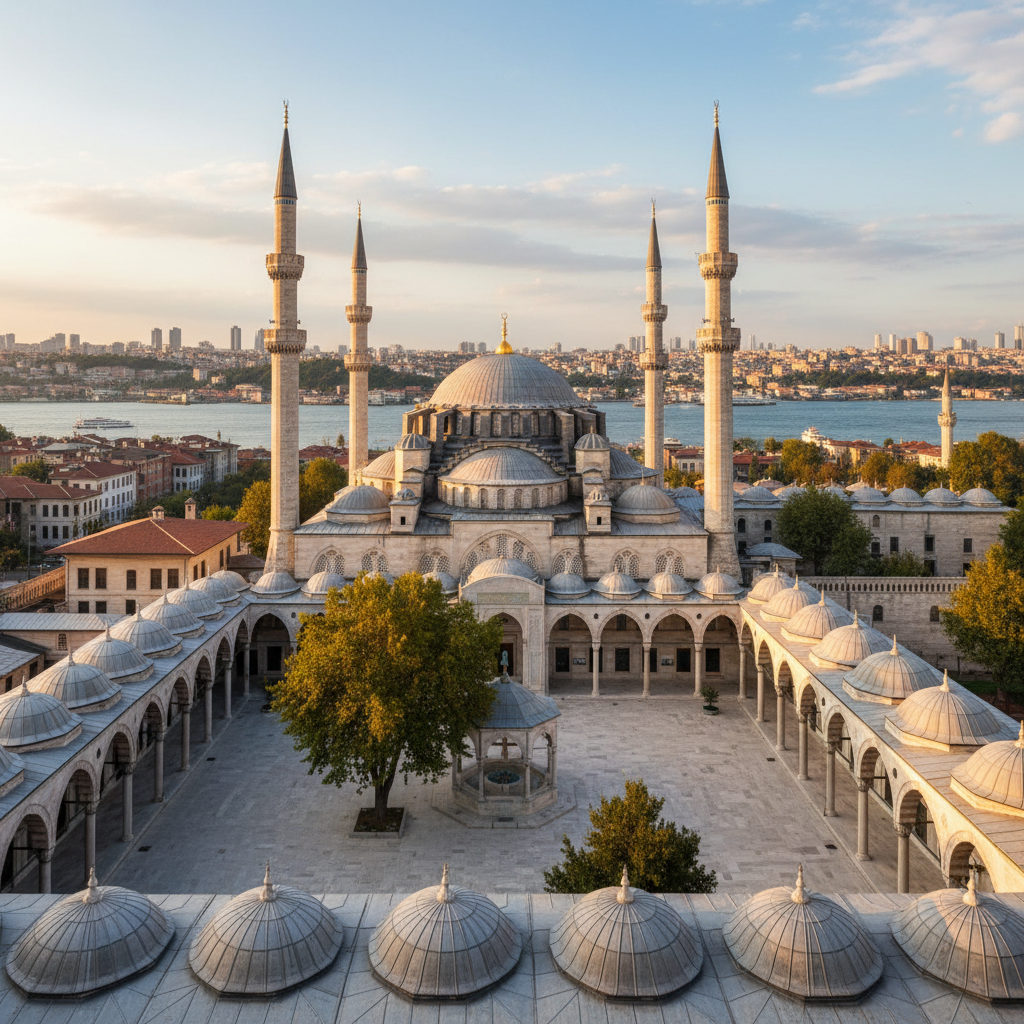
The main prayer hall of the mosque has a central domed structure. The dome rests on four large elephant feet and is supported by semi-domes. This planning creates a spacious and airy atmosphere inside. The interior decorations of the mosque feature kalem işi (pen work) embroideries, tile panels, and examples of calligraphy. The mihrab and minbar, in particular, dazzle with their intricate craftsmanship.
The mosque's courtyard is a spacious and peaceful area. A fountain is located in the center of the courtyard, surrounded by arcades. The tiles and calligraphic inscriptions under the arcades offer visitors a distinct aesthetic experience. The courtyard is especially crowded on Fridays and religious holidays, becoming a gathering point for the congregation of Eyüp Sultan Mosque.
Tomb and Visitation Areas
One of the most important sections of Eyüp Sultan Mosque is the tomb of Abu Ayyub al-Ansari. The tomb is located in a separate section on the qibla side of the mosque and is usually entered from the mosque courtyard. The interior of the tomb is covered with valuable tiles. Particularly the 16th-century Iznik tiles add a special splendor to the tomb. Silk and gold embroidered coverings are placed over the sarcophagus. The tomb is considered a sacred place, visited by thousands of people throughout the year. Visitors pray here, read the Quran, and seek spiritual peace.
Around the tomb, there are hazireler (cemeteries) dating from the Ottoman period. Important statesmen, scholars, and religious leaders are buried in these cemeteries. These graveyards complete the historical fabric of the mosque and offer visitors the opportunity to trace the footsteps of the past.
Minarets and Exterior Facade
Eyüp Sultan Mosque has two minarets. These minarets stand out with their slender and elegant structures rising up to the balconies (şerefe). The balconies of the minarets are adorned with muqarnas carvings. The exterior facade of the mosque is built with cut stone masonry, and the windows are decorated with wooden lattices. Baroque and Empire influences on the exterior facade are clearly visible, especially in the carvings around the windows and the decorations at the entrance doors.
Eyüp Sultan Mosque and Life Around It
Eyüp Sultan Mosque and Life Around It
Eyüp Sultan Mosque, beyond being just a place of worship, has created a unique culture of life around it. Thanks to the mosque's presence, the Eyüp district has become one of Istanbul's most mystical and spiritual areas.
Eyüp Sultan Bazaar
Right next to the mosque is the Eyüp Sultan Bazaar. For centuries, this bazaar has hosted shops selling religious items, souvenirs, traditional handicrafts, and local delicacies. The bazaar features traditional artisans such as rosary makers, herbalists, religious booksellers, and halva makers. The bazaar is a popular stop for visitors to the mosque and reflects the unique atmosphere of Eyüp.
Pierre Loti Hill
Pierre Loti Hill, located near Eyüp Sultan Mosque, is famous for its magnificent Golden Horn view. You can take a cable car up to the hill and enjoy the unique beauty of Istanbul while sipping tea at the cafes there. Pierre Loti takes its name from the French writer Pierre Loti, who lived here, and it is a resting and viewing point that complements the spiritual atmosphere of the mosque.
Social and Cultural Impact of Eyüp Sultan Mosque
Eyüp Sultan Mosque has played a central role in the religious and cultural life of Istanbul's people for centuries. Especially during Ramadan and Eid al-Adha, on holy nights, and for Friday prayers, the mosque and its surroundings host large crowds. People gather here to pray, breathe in the spiritual atmosphere, and strengthen their social bonds.
_The mosque has also hosted many religious ceremonies and events._ Circumcision ceremonies, mawlid readings, and various charitable activities are traditional events around Eyüp Sultan Mosque. These events show that the mosque is not only a place of worship but also a center for social gathering and solidarity.
Spiritual Secrets and Legends of Eyüp Sultan Mosque
Spiritual Secrets and Legends of Eyüp Sultan Mosque
Eyüp Sultan Mosque is interesting not only for its architecture and history but also for the spiritual secrets and legends that have formed around it. These legends reinforce the sanctity of the mosque and leave a deep impression on visitors.
The Tomb of Abu Ayyub al-Ansari
The greatest secret and spiritual draw of the mosque is the presence of Abu Ayyub al-Ansari's tomb here. According to tradition, Abu Ayyub al-Ansari, who was martyred during the first siege of Istanbul, was buried near the city walls as per his will. Fatih Sultan Mehmet's discovery of the tomb after the conquest was considered a spiritual sign of the conquest. This event played a key role in the perception of Eyüp Sultan Mosque as a sacred place.
Wish Trees and Vows
In the courtyard and around the mosque, there are trees known as wish trees. Visitors tie cloths to these trees, hoping their wishes will be granted. Additionally, vows are made and prayers are offered around the tomb. These traditions show how intertwined Eyüp Sultan Mosque is with the faith and hopes of the people.
Sword-Girding Ceremonies at Eyüp Sultan Mosque
The sword-girding ceremonies performed at Eyüp Sultan Mosque during the ascension of Ottoman sultans to the throne are also among the mosque's spiritual secrets. These ceremonies symbolized the sultan's religious leadership and justice. The girding of the sword was an important ritual demonstrating that the sultan embraced the spiritual legacy of Abu Ayyub al-Ansari and would follow his path. These ceremonies emphasize the political and religious authority of the mosque.
Conclusion: The Enduring Legacy of Eyüp Sultan Mosque
Eyüp Sultan Mosque is one of Istanbul's most special and meaningful structures. With its history, architecture, surrounding life culture, and spiritual secrets, it offers visitors a unique experience. This sacred place, a legacy of Fatih Sultan Mehmet, has been a crossroads of faith, history, and culture for centuries. Every corner of the mosque is filled with stories stretching from the past to the present, and it is one of the places that best reflects the soul of Istanbul. Visiting Eyüp Sultan Mosque is not just seeing a place of worship, but also witnessing the deep roots of the Ottoman Empire and the spiritual atmosphere of Istanbul. This unique structure will continue to welcome visitors and offer them peace.
Sıkça Sorulan Sorular
Who built the Eyüp Sultan Mosque and when?
The first Eyüp Sultan Mosque was built by Fatih Sultan Mehmet after the conquest of Istanbul, starting in 1458. It was later extensively rebuilt by Sultan Selim III between 1798 and 1800.
What is the significance of Abu Ayyub al-Ansari's tomb at the mosque?
The mosque is named after Abu Ayyub al-Ansari, the standard-bearer of Prophet Muhammad, whose tomb is believed to be located here. His tomb makes the mosque a highly sacred site and a major pilgrimage destination.
What architectural styles can be seen in Eyüp Sultan Mosque?
The mosque exhibits a blend of early Ottoman architecture, reflecting simplicity and functionality, with later Baroque and Empire influences from its 18th-century reconstruction, particularly in its exterior and interior decorations.
What other attractions are near Eyüp Sultan Mosque?
Near the mosque, visitors can explore the Eyüp Sultan Bazaar, known for religious items and traditional crafts, and Pierre Loti Hill, which offers magnificent views of the Golden Horn.
Why were sword-girding ceremonies held at Eyüp Sultan Mosque?
Sword-girding ceremonies were held here for Ottoman sultans upon their ascension to the throne. This ritual symbolized the sultan's religious leadership, justice, and commitment to the spiritual legacy of Abu Ayyub al-Ansari.